Sunday, April 24, 2011

Imagination in Focus is LEGIT! Business cards!

Just got my business cards in the mail and eep! They're so pretty!
I'd seen on a couple of blog sites that business cards were a good idea for BEA attendees, and that Vista Print did good work.
They were so right!
I was able to design my own, include my button, and ended up paying about $15 for 500.
They also quoted me May 2nd for the delivery, but I got them yesterday.
If anyone is thinking about doing business cards (for their blog or anything else), I sincerely recommend using Vista Print! I thought around $15 for 500 was very reasonable.
The cards aren't really smudgy in real life - I just blurred out my address & last name.
Teehee!
What do you guys think?

Saturday, April 23, 2011

Favorite Easter Story :)

Happy Easter, everyone! This is an Easter story that I've heard for years and probably some of you have heard it, too. I put it up last year, too. So in honor of Easter, here is -


The Empty Egg (apparently based on a true story)

Jeremy was born with a twisted body and a slow mind. At the age of 12, he was still in 2nd grade, seemingly unable to learn. His teacher, Doris Miller, often became frustrated with him. He would squirm in his seat, drool, and make grunting noises. At other times, he spoke clearly and distinctly, as if a spot of light had penetrated the darkness of his brain. Most of the time, however, Jeremy just irritated his teacher.

One day she called his parents and asked them to come in for a consultation. As the Forresters entered the empty classroom, Doris said to them, "Jeremy really belongs in a special school. It isn't fair to him to be with younger children who don't have learning problems. Why, there is a five year gap between his age and that of the other students."

Mrs. Forrester cried softly into a tissue, while her husband spoke. "Miss Miller," he said, "there is no school of that kind nearby. It would be a terrible shock for Jeremy if we had to take him out of this school. We know he really likes it here."

Doris sat for a long time after they had left, staring at the snow outside the window. Its coldness seemed to seep into her soul. She wanted to sympathize with the Forresters. After all, their only child had a terminal illness. But it wasn't fair to keep him in her class. She had 18 other youngsters to teach, and Jeremy was a distraction. Furthermore, he would never learn to read and write. Why waste any more time trying?

As she pondered the situation, guilt washed over her. Here I am complaining, when my problems are nothing compared to that poor family, she thought. From that day on, she tried hard to ignore Jeremy's noises and his blank stares.

Then one day, he limped to her desk, dragging his bad leg behind him. "I love you, Miss Miller!" he exclaimed, loud enough for the whole class to hear. The other students snickered, and Doris' face turned red. She stammered, "Wh-why that's very nice, Jeremy. N-now please take your seat."

Spring came, and the children talked excitedly about the coming of Easter.To emphasize the idea of new life springing forth, she gave each of the children a large plastic egg. "Now," she said to them, "I want you to take this home and bring it back tomorrow with something inside that shows new life. Do you understand?"

"Yes, Miss Miller," the children responded enthusiastically- all except for Jeremy. He listened intently; his eyes never left her face. He did not even make his usual noises. Did he understand the assignment? Perhaps she should call his parents and explain the project to them.
That evening, Doris' kitchen sink stopped up. She called the landlord and waited an hour for him to come by and unclog it. After that, she still had to shop for groceries, iron a blouse, and prepare a vocabulary test for the next day. She completely forgot about phoning Jeremy's parents.

The next morning, 19 children came to school, laughing and talking as they placed their eggs in the large wicker basket on Miss Miller's desk. After they completed their math lesson, it was time to open the eggs.

In the first egg, Doris found a flower. "Oh yes, a flower is certainly a sign of new life," she said. "When plants peek through the ground, we know that springis here." A small girl in the first row waved her arm. "That's my egg, Miss Miller," she called out.

The next egg contained a plastic butterfly, whichlooked very real. Doris held it up. "We all know that a caterpillar changes and grows into a beautiful butterfly. Yes, that's new life, too."

Little Judy smiled proudly and said, "Miss Miller, that one is mine." Next, Doris found a rock with moss on it. She explained that moss, too, showed life. Billy spoke up from the back of the classroom, "My daddy helped me," he beamed.

Then Doris opened the fourth egg. She gasped. The egg was empty. Surely it must be Jeremy's, she thought, and of course, he did not understand her instructions. If only she had not forgotten to phone his parents. Becauses he did not want to embarrass him, she quietly set the egg aside and reached for another.

Suddenly, Jeremy spoke up. "Miss Miller, aren't you going to talk about my egg?"

Flustered, Doris replied, "But Jeremy, your egg is empty."

He looked into her eyes and said softly, "Yes, but Jesus' tomb was empty, too."

Time stopped. When she could speak again, Doris asked him, "Do you know why the tomb was empty?"

"Oh, yes," Jeremy said, "Jesus was killed and put in there. Then His Father raised Him up."

The recess bell rang. While the children excitedly ran out to the schoolyard, Doris cried. The cold inside her melted completely away.

Three months later, Jeremy died. Those who paid their respects at the funeral were surprised to see 19 eggs on top of his casket... all of them empty.


I love stories like this that deal with teachers and their students. I want to be a teacher when I graduate (which will happen THREE SATURDAYS FROM NOW!), so that's one reason this story has always stuck with me. Happy Easter, everybody!

Friday, April 22, 2011

5-star Favorite Books!

Occasionally I run this feature called "Memory Lane," where I look back at whatever I was reading approximately one year ago (or sometimes two).
This time, though, I wanted to take a look at all the 5-star "fangirly" reviews I've written in the past twelve months, April-to-now.


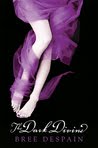
The Dark Divine - Bree DespainEyes Like Stars - Lisa MantchevThe Hunger Games - Suzanne CollinsJellicoe Road - Melina MarchettaThe Knife of Never Letting Go - Patrick NessNevermore - Kelly CreaghSabriel - Garth NixShiver - Maggie StiefvaterTyger Tyger - Kersten HamiltonUglies - Scott WesterfeldWildwood Dancing - Juliet MarillierWondrous Strange - Lesley Livingston

I guess you could say that these (and some 4-star rated books I've read) are my favorites.
So...yes, I do use the 5-star rating, though the most common rating I give out is 4-star (which is still really good!). Just wanted to showcase these fangirly reviews from the past year.
:)

Food-for-thought-question:
Does rating a book 5 stars mean that you liked every single sentence? Can you still rate a book 5 stars overall, even if there were parts of the plot you wish had been done differently?
Because that's true for me with pretty much all of those...still loved them overall!

Wednesday, April 20, 2011

Review - PLAGUE

Plague (Gone, #4) - Michael Grant
Genre: YA Speculative Fiction/Science Fiction/Dystopian
# of pages: 492
(ARC)
Publisher: Harper Collins
Recommended for: 14+

Pretty much because if you're like me and you've read/enjoyed the previous three books in the Gone series, *not* continuing would not be an option. We're all way too invested in the FAYZ at this point.
For the most part, Plague was just as entertaining and action-packed as its predecessors.
To be honest, though, I'm starting to have an issue with the determined length of this series.
You see, I kind of wish this series would only be 5 books, instead of, like, 6. Knowing that there are (at least) two more books to go before any kind of resolution hits is rather exhausting.
I loved Gone and thought Hunger was very well-done, but starting with Lies, the series started to take on an almost soap-opera element: there were so many characters to keep track of, and they all seemed to develop sudden, arbitrary fights with each other. And while I initially loved Sam and Astrid (the series' main couple), I hate to say that now it's difficult to read their segments, because they're always fighting. For no reason. At the beginning of the book, Sam does something really stupid, and Astrid seems to have developed this nasty, crabby personality.
I understand why the characters are portrayed this way - at least, I think I do. It's like the author's trying to add drama with character interactions, but having characters who don't get along and act incredibly immature is not the way to maintain intrigue. At least, I don't think it is.
To be fair, this was a quick book to read, mainly because the plot was very absorbing. Grant has always done a great job giving readers excitement and lots of action. However, there really wasn't anything new that happened in Plague. That's one of the reasons I'm getting a little bored with this series: it just seems like everything's been done already and in many ways, Plague's storylines were just like those in Hunger and Lies. There really wasn't anything new here.
I think series books should progress and move on towards the big climax of the overarching story, but that doesn't seem to happen here. Instead, Plague just kind of meanders along, biding time until the next installment.
I spent the last week trying to figure out how to word this review. In truth, I read Plague back in February, so my thoughts have congealed since then. I still enjoyed Plague and since I'm already hooked on the series, I'll definitely be reading the next installments. If you haven't read the series, I'd still put it on your 'to-do' list, because the concept (what would a society made up of kids 15 and younger look like?) is really intriguing, but this series is starting to take a repetitive path...

Final Rating

Tuesday, April 19, 2011

5 Reasons Why I Love MG/MG-YA Novels!

1. More exciting/original fantasy stories!
This is definitely a bias of mine, but it really seems to me that some of the most well-though-out fantasy storyworlds are in the MG books/series and the MG-to-YA crossovers. One of the kids I know said it's because "kids believe more stuff and don't need a lot of convincing."

2. The awesomeness of Rite-of-Passage
I don't know about you guys, but I absolutely love watching characters grow and mature.
I like being able to see them grow up as the greater, overarching story goes along.
A lot of times in Young Adult, the series timeline doesn't last longer than a year, or a few years at the most. Characters who begin as teenagers are usually still teens
(though perhaps older) at the story's conclusion. What's cool about a series like Harry Potter is being able to see the main characters grow up.

3. Cute love stories
If love stories are even part of the overall plot (and in a lot of MG series, they are not), they seem to be much sweeter: boy seems nicer to girl, girl seems nicer to boy, there's less likely to be elements such as love triangles (though this may loose some, I love it!). I really think a lot of the dialogue is better: my two favorite literary couples of all time happen to be from MG/MG-YA crossover series: Percy & Annabeth (Percy Jackson series) and Taran & Eilonwy (Chronicles of Prydain). There's also less of an overall focus on the love story part of the plot, and a bigger focus on ACTION!

4. BOYS!
A librarian once told me that in elementary and middle school, boys (overall) read more than girls, but by high school, girls read more than boys. The majority of true "YA" novels are either narrated by a girl, or have a girl as the main character. As a girl, I
kind of like this, but I also love that younger boys have an incredible amount of options available to them: Septimus Heap, Artemis Fowl, Percy Jackson, Greg the "Wimpy Kid," Harry Potter, Eragon, Thomas (Wardstone Chronicles), Josh Newman (Secrets of Nicolas Flamel), etc.

5. "Seed Books"
Many, if not most, of modern books targeted at the "middle grade" audience can be enjoyed and devoured by older readers. And I definitely believe that there are more quality books out there being written and targeted specifically at young readers than when I was a kid.
I know that for me, my love of reading really took root when I was in the "middle-grade" age.
And I continued into the more teen-oriented branch of Young Adult Fiction (which I never outgrew). So I thank you, middle-grade novels and MG-YA cr
ossovers, for being the "seed" books that really get kids invested in reading. Those teens (and older) who read YA, I'm willing to bet, started out with you!


*MG/YA Crossover is my own vocabulary term for books that fall, I'd say, into both genres - "middle grade" because technically the characters may begin in that age group (11-13) - but gradually get over and become teens as the series progresses. The
Harry Potter and Percy Jackson series are the examples that immediately come to mind.

Thursday, April 14, 2011

6 Weeks Till BEA - WHO'S GOING??

Hey all!
I calculate about 6 weeks until Book Expo America 2011!!!And I am super pumped because, if all goes well and there aren't any hiccups, I'll be in New York to attend. It was my family's graduation gift to me, and I seriously cannot wait! Like I said, unless anything unexpected happens, I'm planning on being there.

Is anybody else going to BEA this year? Has anybody been before? If so, do share your experiences!! Is there any bit of advice that you'd like to pass on?This is apparently what it looks like!!

Sunday, April 10, 2011

I Love You Too, 3rd Person Narrative

Did you know that third-person narration is the most common narrative mode in literature?
As someone who mostly reads MG & YA literature, I found that surprising. It's my observation that a lot (maybe not 'most,' but a lot) of YA books these days are written in first person. And we like that. First persons have "authentic" voices, they make the characters seem more real, and they're more interesting than third-person narratives. Supposedly.

Third-persons, on the other hand, can be limiting. I've seen a lot of reviews where the chief reason for not liking a book is because the story was told in a 3rd person narrative. And that's fine, if that's your prerogative. I guess I don't need a book to be told in 1st person only in order to relate to the characters, or in order for them to seem real to me. It's kind of a bummer when I see this narrative mode dismissed for not being as cool-sounding or authentic as first-person. And as someone whose MS is written in third-person format, I'd hate to think that my story may be passed aside because my "character's voice" isn't strong enough or authentic-sounding. But that's a writing point. As a reader, I have to say that I usually love third-person narratives and am a little "iffy" on 1st persons.
A first-person narrative can be amazing and add a whole new dimension to a story, if the reader likes the narrator's voice. My favorite narrative voice to this day is Percy Jackson of the Percy Jackson and the Olympians series. On the other hand, the deciding factor between loving a book and...not exactly loving, has often been the voice of narrators not quite so endearing, like my personal experience with Katniss from the Hunger Games series (especially Mockingjay), Lily from Forgive My Fins, Bella from the Twilight series, and (though I liked the book as a whole), Ari from Darkness Becomes Her. In all of these cases, I got a little *too much* character attitude that, perhaps, a third-person style would have quelled. This is all my opinion.

So what is the real purpose of this random, meandering post? To declare my love and admiration for this popular and classic storytelling mode, and to offer up some of my favorite/well-known examples of effective, non-limiting books (that still managed to have three-dimensional characters!)

The Artemis Fowl series - Eoin Colfer
The Books of Bayern
- Shannon Hale
The Chronicles of Narnia - C.S. Lewis*
The Chronicles of Prydain - Lloyd Alexander*
The Great Tree of Avalon series - T.A. Barron
The Hobbit - J.R.R. Tolkien
Holes - Louis Sachar
The Hollow Kingdom
- Clare Dunkle
The Keys to the Kingdom series - Garth Nix
The Looking Glass Wars trilogy - Frank Beddor
The Mortal Instruments series - Cassandra Clare
The Redwall series - Brian Jacques
Sabriel - Garth Nix
The Septimus Heap series - Angie Sage
The Theatre Iluminata trilogy - Lisa Mantchev
Uglies - Scott Westerfeld
The
Wondrous Strange trilogy - Lesley Livingston**
A very recent debut,
Nevermore - Kelly Creagh
And lest we forget,
The Harry Potter series - J.K. Rowling

I tend to think, light-heartedly of course, that if third-person narratives were a good enough storytelling mode for J.K. Rowling to use, they're good enough for any future writer! Or reader.
So live on, third-person, whether limited or omniscient. There's just something enticing about your style.
Your fan,
Amelia :D
 
Blog designed by Dreamy Blog Designs using Joifa Designs Birght Night and Cozy kit